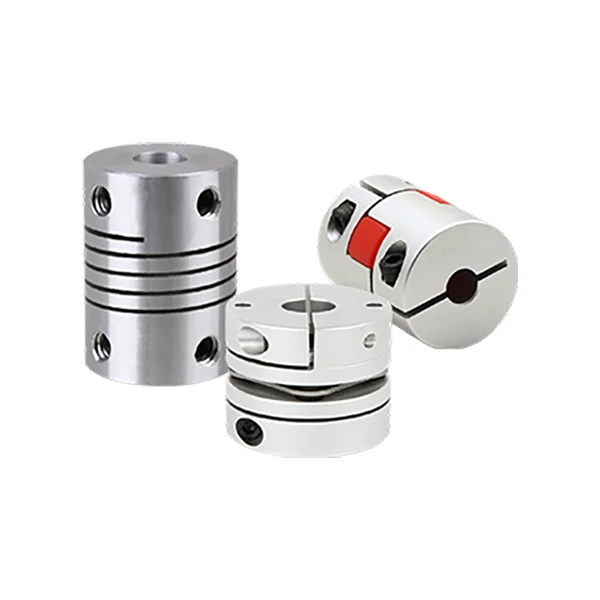
1. Spider Hardness and Misalignment Trade-Offs
Plum couplings pair aluminum or steel hubs with a star-shaped elastomer spider. Soft spiders flex easily to soak up angular tilt and motor vibration on light pick-and-place axes, though heavy torque spikes can twist them under load.
Harder polyurethane spiders resist windup when a milling or indexing axis snaps back and forth. You give up a bit of vibration damping, yet gain sharper response without sluggish lag at the tool tip.
Do not count on a plum spider to rescue a crooked build. Even with a compliant insert, keep parallel offset small so heat does not cook the spider early.
2. Shop Clamping Habits, Keyways, and Lube RulesWipe Shafts Dry: Clean shipping oil off both the motor shaft and screw journal before sliding the hubs on. Oil inside a split clamp lets the hub slip under peak acceleration and chews up the shaft fit.
Lock Clamps Before Spider Swap: Seat the hubs flush against their shoulder stops and tighten the clamp screws evenly. If you ever swap a worn spider later, slide the motor back slightly instead of prying the jaws apart with a screwdriver.
Keep Spiders Dry: Run plum spiders dry without grease or oil sprays. Mineral oils swell or soften standard polyurethane over time, turning a tight drive sloppy.
A: The spider teeth are worn thin or chewed up from overload, leaving rotational slop between the hubs. Pull the guard, inspect the spider ribs, and drop in a fresh insert before the metal jaws start clashing.
A: Clamp hubs grip evenly around the shaft and hold up better under frequent reversals. Set screws alone can back out under vibration or raise burrs that make later teardown a headache.
Keep hubs clean and dry, pick spider hardness to match reversal loads, and swap worn spiders before metal hits metal—that handles most plum coupling headaches on feed axes.