1. Cylindrical vs. Crowned Outer Ring Profiles
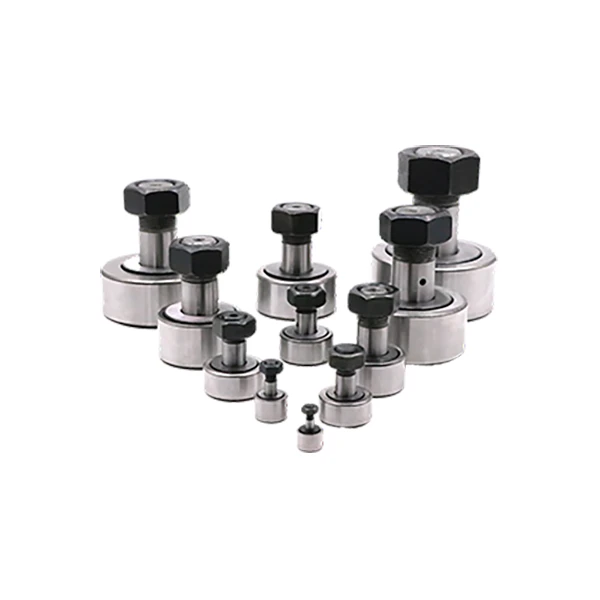
Cam followers come in two main outer ring shapes: flat cylindrical and slightly curved crowned profiles. Cylindrical rollers spread load across the full width of a hardened steel track, making them the right pick when your mounting plate is machined dead-square to the rail.
Crowned outer rings feature a subtle radius across the rolling face. On welded conveyor frames or long transfer tables where slight frame twist is unavoidable, a crowned roller stops the sharp edges of the bearing from digging into the track steel.
Inside that thick outer shell, full-complement needle rollers pack maximum steel contact area into a tight radial space. That structure handles sudden shock loads from indexing cams and heavy pallet stops without brinelling the inner stud raceway.
2. Shop Mounting Rules: Stud Torquing, Oil Holes, and Track HardnessCheck Track Surface Hardness: Never run hardened bearing-steel cam followers directly against soft mild-steel angle iron or unhardened aluminum extrusions. The thick outer ring will chew deep ruts into soft metal within weeks; keep track hardness above HRC 58.
Align the Radial Grease Hole: Look closely at the threaded stud before sliding it into your mounting hole. Every CF stud has a cross-drilled lube port leading to the needle rollers—orient that hole away from the heavy load zone so peak pressure does not squeeze grease back out or weaken the stud wall.
Torque the Nut, Not the Stud Head: Hold the hex socket or screwdriver slot on the roller face just to keep the stud from spinning while you tighten the locknut from behind. Trying to crank the stud tight using only the small front hex socket often splits the hardened head.
A: Either the internal needle rollers packed up with dried grease and shop grit, or the track surface is coated in slippery oil with too little preload against the roller. Clean the track dry and pump fresh NLGI Grade 2 lithium grease through the stud fitting until clean lube purges past the end seals.
A: If your cantilevered stud bends under heavy side loads or you can support the roller from both sides inside a clevis fork, move to a yoke-type track roller. Supporting a through-pin on both ends doubles your radial load capacity compared to a single cantilevered stud.
Keep track steel above HRC 58, point the stud grease port away from the load zone, and tighten from the back locknut—that prevents most cam follower flat-spotting and stud failures on transfer lines.