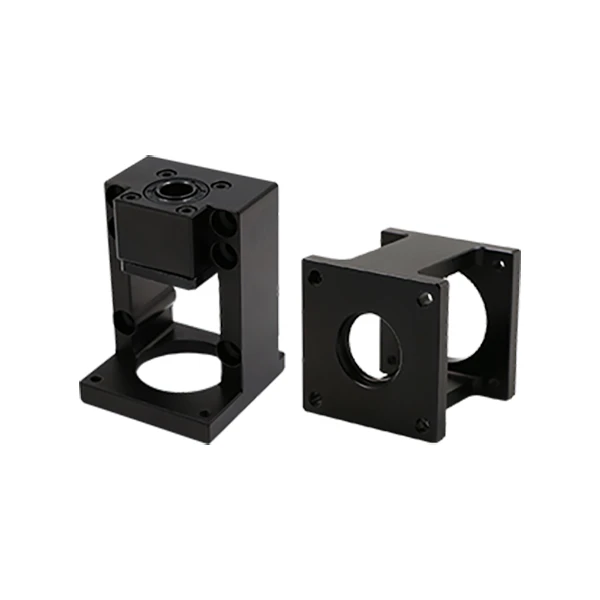
Trying to align a split motor plate and bearing housing with metal shims usually backfires. If the two pieces sit even a fraction of a millimeter off, the misalignment flexes the drive screw, spiking motor current every time the axis accelerates.
Single-piece brackets fix this on the CNC machine. The bearing seat and the motor spigot bore get machined in one single setup, locking concentricity right under 0.01 mm.
Keeping the bore perfectly perpendicular to the mounting face stops the coupling from fighting radial runout. That quiets down high-speed drives, removes axis shudder, and keeps motor bearings running cool.
2. Mounting Sequence: Cleaning, Coupling Setup, and BoltingClean Off Shipping Oil: Wash all protective grease and loose chips off the bracket mating face with isopropyl alcohol. Drop the bracket flat into the machined bed slot before starting any bolts by hand.
Seat the Motor and Hub: Slip your flexible coupling over the motor shaft without tightening the clamp screw. Push the motor pilot into the bracket bore until the flange rests flush against the face—never force or hammer a stubborn spigot.
Torque Bolts in Pairs: Tighten the motor mounting screws in a cross pattern to pull the flange down straight. Pass an Allen key through the side access port to lock the coupling clamp screw onto the screw journal.
A: You either locked down a motor with a bent shaft or trapped metal grit inside the pilot recess. Unbolt the motor, wipe both mating faces clean, and check the shaft runout with a dial test indicator.
A: Only if the bracket uses a multi-pattern face flange. Check the pilot shoulder diameter and bolt pitch circle first—servo motors use metric pilot shoulders while NEMA steppers use imperial locator rings.
Use 1-piece brackets to lock concentricity under 0.01 mm, cross-torque flange bolts, and keep mating faces clean—that handles 90% of motor bracket alignment and vibration issues on automated equipment.